


Is That Burning Smell Normal During Your First Heating Startup?
If you are standing near your vents wondering whether that sudden odor is dangerous, you are asking one of the most common homeowner questions answered during a late fall heating startup. You turn the thermostat to "heat" for the first time in months, the blower kicks on, and suddenly your living room smells like something is on fire. It is an incredibly stressful moment that sends many people rushing to shut off their equipment.
The short answer is that a brief, mild burning smell is usually completely normal. However, knowing the difference between harmless seasonal dust burn-off and a serious mechanical emergency is critical for your home's safety. When the temperature drops, your HVAC system transitions from cooling to heating, bringing entirely different components to life. This guide will help you diagnose the specific type of smell coming from your vents safely, calmly, and without unnecessary panic.
The diagnostic goal: By paying close attention to the exact scent, the duration of the odor, and the sounds your equipment makes, you can quickly determine if you just need to open a window or if you need to call an emergency technician.
Why Idle Heating Systems Accumulate Dust Over the Summer
To understand why your vents smell like a dusty campfire in November, you have to look at what your equipment was doing all summer. While your air conditioner was working overtime to keep you cool, the heating components inside your furnace were sitting completely idle.
Throughout those warm months, airborne particulates naturally circulate through your ductwork. Even with a good filter in place, microscopic debris—pet dander, skin cells, lint, and household dust—gradually settles on the cold, unused surfaces of the heat exchanger and the burners. The local climate plays a major role here. In our years of providing heating services to Fairdale KY area homes, our team at One Choice Mechanical consistently notices that our hot, humid summers cause indoor dust to become slightly sticky, making it cake more heavily onto those idle furnace components over time. This buildup creates a stubborn layer of debris that does not easily blow away when the fan runs.
The Physical Process of Dust Ignition
When late fall arrives and you finally trigger a heating cycle, those dormant components heat up rapidly. The heat exchanger can reach temperatures of several hundred degrees within minutes. The thick layer of caked-on dust literally incinerates on contact with the hot metal. This rapid combustion of organic material is what produces that highly noticeable, slightly musty burning scent.
The role of your air filter: Excessive dust buildup on your heat exchanger is often directly tied to your overall indoor air quality and filter maintenance habits. If you skip filter changes during the summer cooling season, significantly more dust bypasses the filter housing and settles onto the furnace components, making the eventual winter burn-off smell much more pronounced and longer-lasting.
Normal Dust Burn-Off vs. Emergency Odors
Not all burning smells are created equal. Providing a clear diagnostic baseline is the best way to separate a normal seasonal occurrence from a dangerous situation. According to National Fire Protection Association (NFPA) statistics, heating equipment is a leading cause of home fires, which underscores the importance of taking unusual, non-dust odors very seriously during a late fall or November heating startup.
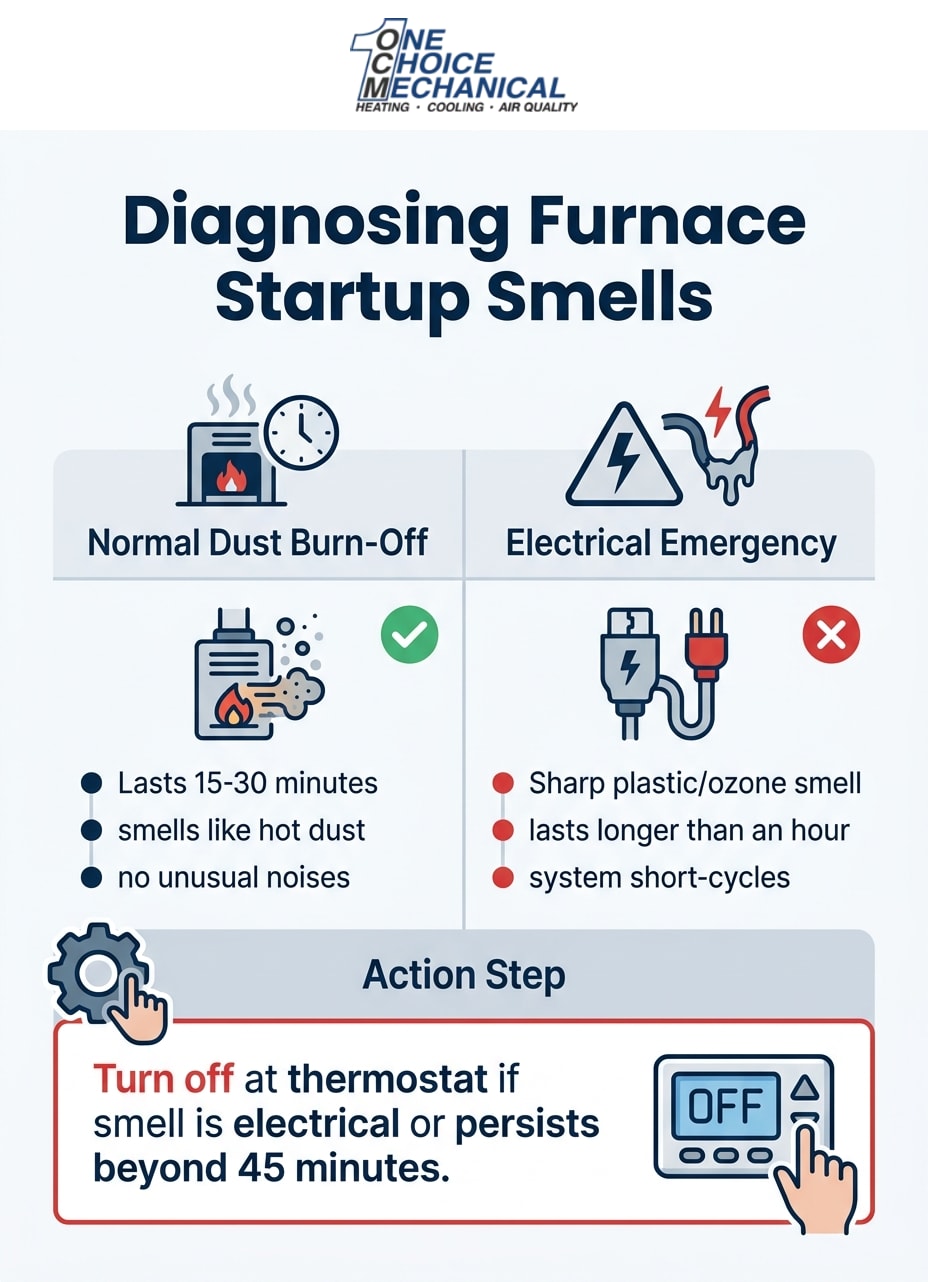
• The Scent — Normal Dust Burn-Off: Toasted dust, singed hair, or a slightly musty, dry heat smell. — Electrical / Mechanical Emergency: Sharp chemical, melting plastic, ozone, or a distinct "fishy" odor.
• The Timing — Normal Dust Burn-Off: Happens immediately upon the very first heating cycle of the season. — Electrical / Mechanical Emergency: Can happen at any time, often intensifying the longer the unit runs.
• The Sounds — Normal Dust Burn-Off: Normal whoosh of air and standard blower motor operation. — Electrical / Mechanical Emergency: Grinding, loud metallic banging, electrical buzzing, or short-cycling.
• The Duration — Normal Dust Burn-Off: Fades away steadily within a single heating cycle. — Electrical / Mechanical Emergency: Persists, grows stronger, or fills the house with visible smoke.
Symptoms of Normal Dust Burn-Off
If your system is experiencing standard dust burn-off, the smell will typically resemble hot dust or a slightly musty burning scent. This odor begins immediately upon the first seasonal ignition. More importantly, no unusual noises—like grinding, scraping, or electrical buzzing—accompany the smell. The equipment should continue to heat your home evenly while the scent gradually dissipates.
Warning Signs of an Electrical or Mechanical Emergency
Emergency situations announce themselves with very different warning signs. Acrid, chemical, or melting plastic odors are never normal. If the system repeatedly shuts off (a process known as short-cycling) or makes loud metallic noises, you are likely dealing with a mechanical failure. Visible smoke coming from the vents or the unit itself is an immediate red flag that requires you to shut the system down completely.
How Long Should the Burning Smell Last?
One of the most reassuring things a homeowner can have is a specific, actionable timeline to monitor their system. If you have confirmed that the odor is simply toasted dust and not melting plastic, you need to know exactly how long to wait before getting worried.
Normal dust burn-off typically dissipates within 15 to 30 minutes of the first heating cycle. Here is the safest way our technicians recommend managing and monitoring that initial late fall or November heating startup:
1. Keep the system running: Provided the smell is definitely just dust, allow the system to run during this initial 30-minute window. Turning it off too soon simply pauses the burn-off process, meaning the smell will just return the next time you try to heat the house.
2. Ventilate the space: We recommend opening a few windows or running your ceiling fans to help ventilate the temporary odor. This keeps your indoor air fresh and prevents the smoke alarms from triggering unnecessarily.
3. Monitor the scent: Stay near a vent and pay attention to the intensity of the smell. It should peak within the first five minutes and then steadily decline.
4. Enforce the time limit: Instruct yourself to turn the system off immediately at the thermostat if the smell persists beyond 45 minutes to an hour. A smell that refuses to fade is a sign that something more than just summer dust is burning.
What to Do If You Suspect an Electrical Issue
If you detect the sharp, unmistakable scent of melting wire insulation, burning rubber, or overheating electronics, you must take immediate action. Electrical faults within heating equipment are serious fire hazards that will not resolve themselves.
The immediate safety steps: First, turn off the heating system immediately at the thermostat. Do not wait to see if the smell goes away. Next, check your main electrical panel for any tripped breakers related to the system. A tripped breaker is a strong indicator that the blower motor is overdrawing amperage or that a short circuit has occurred.
We strictly warn against attempting DIY electrical repairs. Opening a furnace cabinet to inspect high-voltage wiring or control boards without proper training is incredibly dangerous. Melting wire insulation or an overheating blower motor requires professional diagnostic tools. This is where our team's commitment at One Choice Mechanical to transparent, surprise-free service makes a difference. When our technicians arrive at Fairdale KY area homes, we use specialized multimeters to test motor amp draw, safely inspect wire harnesses for scorching, and check capacitors for failure—removing the anxiety of the unknown by explaining exactly what we are testing and why.
Calling a professional is the only safe next step when an electrical smell is present. Ignoring these warning signs often leads to complete system breakdowns and some of the most common HVAC repair issues that could have been avoided with prompt attention.
Preventing Startup Odors with Pre-Winter Maintenance
The best way to handle a stressful late fall or November heating startup is to prevent the burning smell from happening in the first place. This is where routine seasonal maintenance proves its value. A professional fall tune-up involves thoroughly cleaning the heat exchanger before the system is ever turned on, effectively eliminating the dust burn-off entirely.
During a routine fall inspection, technicians do much more than just wipe down the cabinet. Recently, our team helped a local homeowner who scheduled a maintenance visit because their furnace and AC settings were left incorrectly configured from a previous season. Our technician provided a comprehensive 20-point inspection and cleaning, figured out exactly what caused the equipment to run continuously, and reset the settings for optimal performance. This level of proactive care ensures a smooth transition from cooling to heating.
A comprehensive pre-winter inspection typically includes:
1. Cleaning the burners and heat exchanger: Removing the summer dust buildup so it never has a chance to incinerate and cause odors.
2. Inspecting electrical connections: Tightening loose wires and checking for frayed insulation before they cause an electrical burning smell.
3. Testing the blower motor: Ensuring the motor is not overworking, which prevents the overheating and melting odors associated with mechanical failure.
4. Verifying airflow: Checking that your air conditioning solutions and heating systems share a clean, unblocked duct network, preventing the furnace from suffocating and overheating.
Routine maintenance catches failing motors and worn components before they become mid-winter electrical emergencies, giving you peace of mind when the freezing weather finally arrives.
Frequently Asked Homeowner Questions About Heating Startups
Is it normal for a heater to smell like burning?
Yes, for the first run of the season, a mild burning odor is very common. It is simply accumulated dust burning off the heat exchanger after sitting idle all summer. As long as the smell resembles hot dust and fades quickly, it is a normal part of the seasonal transition for Fairdale KY area homes.
How long does the burning smell last when you turn on the heater?
Typically, the normal dust burn-off smell lasts 15 to 30 minutes. It should peak quickly and then steadily dissipate as the system runs. If the burning smell lasts longer than an hour or seems to get stronger, you should shut the system off and contact a professional.
What does an electrical fire smell like in a furnace?
An electrical fire produces a sharp, acrid scent similar to melting plastic, burning rubber, or ozone. Many homeowners often describe it as a strange "fishy" chemical odor coming from the vents. This is a severe warning sign that requires immediate system shutdown.
Why does my heat smell like burning plastic?
A burning plastic smell usually indicates melting wire insulation, a failing capacitor, or an overheating blower motor. Unlike dust burn-off, this is an emergency that requires immediate professional attention. Turn the thermostat off right away to prevent further damage or potential fire hazards.
Can a dirty air filter cause a burning smell?
Yes, a severely clogged filter restricts vital airflow, causing the entire heating system to overwork and overheat. This overheating can produce a hot, burning odor and potentially damage the internal components of the unit. Checking and replacing your filter regularly is the easiest way to prevent this issue.
Should I open windows during the first furnace startup?
Yes, briefly opening a few windows helps ventilate the harmless dust odors from your living space. It improves indoor comfort and prevents sensitive smoke detectors from sounding while the system completes its initial 30-minute burn-off cycle.
Ensure a Safe, Odor-Free Start to the Heating Season
Experiencing a burning smell during a late fall or November heating startup is unsettling, but understanding the mechanics behind it puts you back in control. While a brief, 15-to-30-minute dust burn-off is completely normal, your safety should always come first. If you detect the sharp scent of melting plastic, notice unusual grinding noises, or if the dusty smell simply refuses to fade after an hour, err on the side of caution and turn the system off.
You do not have to guess whether your equipment is safe to operate. If you are unsure about an odor or simply want to ensure your equipment is clean and optimized before the freezing temperatures arrive, exploring professional heating services can provide the peace of mind you need. A thorough inspection and cleaning will leave you with a reliable, odor-free system all winter long. Should you decide it is time to upgrade an older, unsafe unit, generic federal tax credits or local utility incentive programs may apply to qualifying high-efficiency installations—just be sure to verify current programs with a tax professional or your utility provider.