


Facing an Unexpected Heating Crisis During Fall Startup?
Are you dealing with a sudden heating failure right as the temperatures begin to drop? When a sudden breakdown forces you to call for a 24 hour hvac repair, the last thing you want is a rushed decision; instead, you need objective options comparisons for homeowners to determine the best path forward. Here at One Choice Mechanical, our team often sees routine fall heating-startup visits quickly turn from a standard maintenance check into a major decision point if an aging system receives a terminal diagnosis. The transition from mild autumn weather to the freezing conditions of deep winter leaves very little room for error when your primary heat source fails.
Discovering that a system cannot be safely repaired is undeniably stressful. However, this critical window provides an opportunity to evaluate modern, highly efficient technology before the harshest weather sets in. The immediate goal is to stabilize the home, but the secondary goal is to map out a reliable, long-term solution that matches your property's specific thermal needs. Navigating this process requires a clear understanding of what a professional HVAC services evaluation entails and how to weigh the benefits of different heating technologies.
Making an informed choice between a high-efficiency gas furnace and an electric heat pump involves more than just looking at equipment ratings. It requires an objective, technical evaluation of your home's ductwork, insulation levels, and local climate patterns. By thoroughly assessing these factors, we can help you transition from a stressful emergency scenario into a confident investment in your home's long-term comfort and safety.
The Reality of Fall Heating-Startup Failures
Dormant heating systems are highly prone to unexpected failures when they are first stressed by dropping fall temperatures. After sitting idle through the spring and summer months, internal components can suffer from dust accumulation, dried-out lubrication, or unseen corrosion. When the thermostat is finally switched to heat, these hidden vulnerabilities are suddenly put under immense operational strain, often leading to immediate breakdowns.
1. Initial stress on dormant parts: Blower motors that have sat idle can seize, and ignitors can fail to spark after months of inactivity.
2. Safety sensor lockouts: Flame sensors and limit switches often accumulate debris, causing the system to continuously shut down as a safety precaution.
3. Heat exchanger vulnerabilities: Microscopic cracks that formed during the previous winter expand when exposed to high heat again, creating severe carbon monoxide risks.
4. Electrical component degradation: Capacitors and contactors can lose their charge or become pitted, leading to sudden electrical failures upon startup.
A routine inspection or initial startup can quickly escalate into a situation requiring immediate professional intervention. For example, during last year's fall heating-startup season right here in Fairdale, our technicians responded to a call where system settings had been left on hold. Our team performed a complete 20-point inspection and cleaning, ensuring the system was evaluated efficiently despite initial communication and technical hurdles. This level of meticulous evaluation is our standard procedure to determine if an aging unit can be salvaged or if it poses a safety risk to the household.
Thorough multi-point inspections are the only way to accurately diagnose the health of a heating system. We measure electrical draw, test safety limits, and inspect the integrity of the combustion chamber. If these tests reveal irreparable damage, discovering the issue in the fall provides a critical window to replace the system before deep winter freezing sets in. Addressing a terminal diagnosis early means you can schedule a proper heating repair or replacement on a controlled timeline, rather than scrambling for space heaters in January.
What to Expect from a 24-Hour Emergency Response
When a heating system fails entirely during a cold snap, the timeline of a true emergency response moves quickly. From the initial late-night or weekend call to our technician's arrival, the primary focus is on restoring a safe environment. At One Choice Mechanical, our emergency dispatch prioritizes calls based on safety risks and temperature extremes, ensuring that vulnerable households receive immediate attention.
Upon arrival, our technician's first objective is stabilizing the home's temperature and ensuring there are no immediate safety hazards. This includes checking for gas leaks, carbon monoxide presence, or electrical shorts at the breaker panel. Once the area is secured, the diagnostic process begins. In one recent emergency situation our crew handled, a homeowner faced an urgent HVAC issue requiring immediate attention; our response team arrived promptly, stabilized the environment, and clearly explained all actions taken, resulting in a fully resolved issue and a highly satisfied customer. This transparent approach is the hallmark of our professional emergency HVAC repair services.
The Diagnostic Breakdown: Our technicians will clearly explain the diagnosis, detailing exactly why the current system has failed. We will show you the worn components, explain the safety implications, and provide a straightforward assessment of whether a repair is technically viable. If the heat exchanger is cracked or the compressor is grounded, pouring money into a temporary fix is often a poor investment.
If a repair is no longer viable, the conversation transitions into objective replacement options. This is where One Choice Mechanical's commitment to responsive, 24/7 emergency support acts as a critical safety net during the vulnerable window between a system failure and a new installation. You receive a clear, pressure-free technical breakdown of your options, allowing you to make a sound decision based on facts rather than fear.
Comparing Your Options: High-Efficiency Gas Furnace vs. Electric Heat Pump
When facing a terminal diagnosis, the two leading choices for modern home heating are the high-efficiency gas furnace and the electric heat pump. Both systems represent significant technological leaps over older models, but they operate on fundamentally different principles. Understanding these differences is the key to selecting the right system for your specific property, which is why we always provide objective options comparisons for homeowners.
High-efficiency gas furnaces, often referred to as condensing furnaces, utilize secondary heat exchangers to extract additional thermal energy from combustion gases before they are vented outside. This allows them to achieve AFUE ratings of 90% or higher, meaning almost all the fuel consumed is converted directly into usable heat. Modern cold-climate electric heat pumps operate differently by transferring heat rather than generating it. Using advanced refrigerants and variable-speed compressors, they extract ambient heat from the outside air and move it indoors.
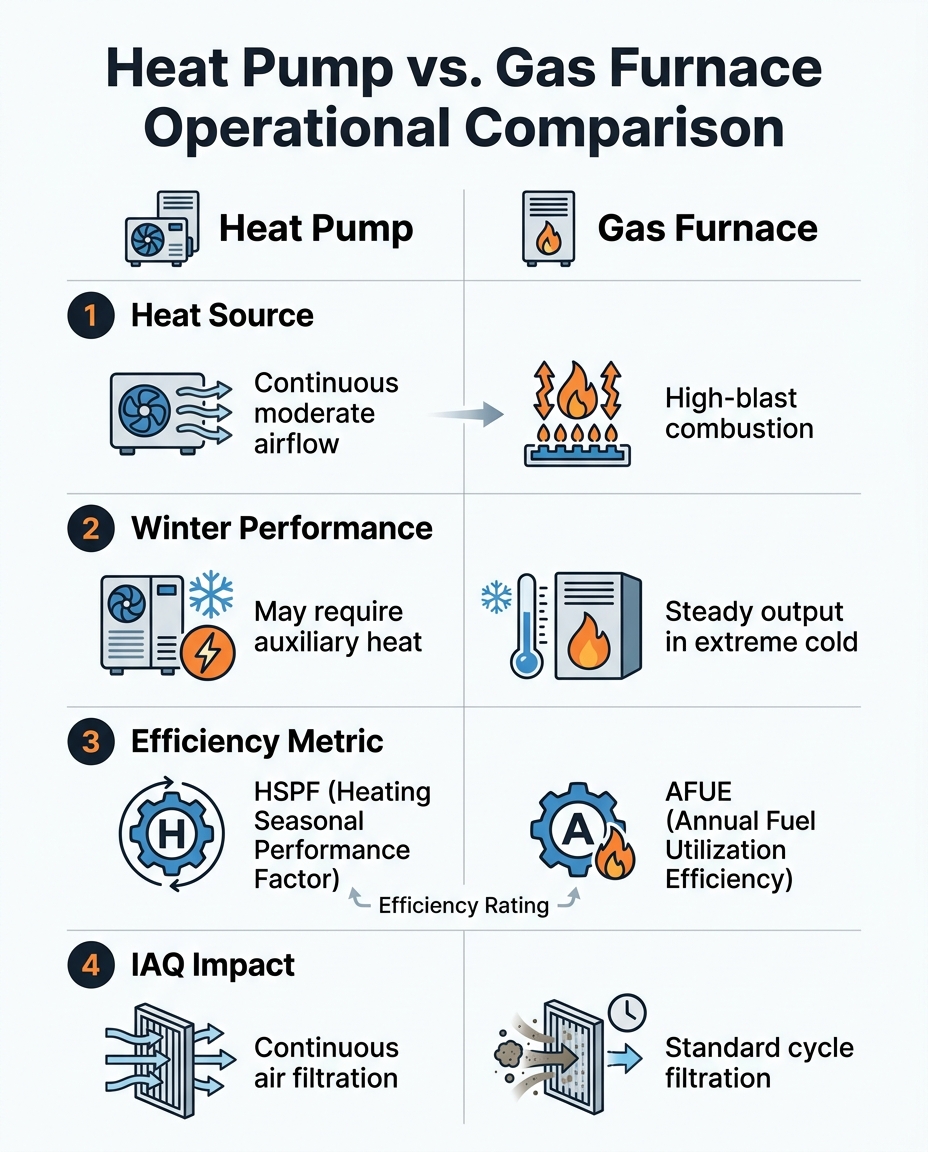
• Heat Source — High-Efficiency Gas Furnace: Combustion (Natural Gas or Propane) — Electric Heat Pump: Heat transfer via compressed refrigerant
• Airflow Profile — High-Efficiency Gas Furnace: High-blast, very warm air (120°F+) — Electric Heat Pump: Continuous, moderate warmth (90°F - 100°F)
• Ductwork Compatibility — High-Efficiency Gas Furnace: Standard sheet metal ducting — Electric Heat Pump: Standard ducting (often requires larger returns)
• Installation Timeline — High-Efficiency Gas Furnace: Typically 1 day (if ductwork is intact) — Electric Heat Pump: Typically 1 to 1.5 days
Operational Differences and Heat Sources
The steady, high-blast output of gas combustion creates a distinct heating profile. When a gas furnace cycles on, it quickly floods the home with high-temperature air, rapidly raising the indoor temperature before shutting off again. This provides a fast recovery time if you lower your thermostat while away at work.
Conversely, the continuous, moderate-temperature airflow of electric heat pumps requires a different operational strategy. Heat pumps are designed to maintain a consistent temperature rather than rapidly recovering from deep setbacks. They run for longer, quieter cycles, continuously circulating air that feels cooler to the touch than furnace air, but effectively maintains the set indoor temperature over time.

Evaluating Winter Performance for Freezing Temperatures
The critical test for any heating system is its ability to maintain consistent indoor comfort when outside temperatures plummet. As the weather shifts from mild autumn breezes to harsh winter storms, the operational limits of your HVAC equipment are put to the test. Understanding how each system handles this transition is vital for long-term satisfaction.
Gas furnaces provide a rapid, high-heat output that easily combats extreme cold snaps. Because they generate heat through combustion, their output capacity is entirely independent of the outdoor temperature. Whether it is 40°F or 0°F outside, a gas furnace will deliver the same intense heat to your living spaces. This makes them exceptionally reliable during severe winter weather events where rapid heat recovery is necessary.
Heat pumps have a different performance curve. Because they extract heat from the outside air, their efficiency and heating capacity naturally decrease as the outdoor temperature drops. While modern cold-climate heat pumps are highly advanced, Fairdale's intense temperature swings—from mild fall afternoons to freezing winter nights—impact the auxiliary heating needs of these systems. When the temperature drops below the unit's balance point, electric resistance heat strips (auxiliary heat) must engage to supplement the warming process.
Weighing the pros and cons: To make the best choice, homeowners must weigh these operational realities against their home's insulation and layout. In our experience working on homes throughout the Fairdale area, a tightly sealed, well-insulated home may rarely trigger a heat pump's auxiliary strips, making it highly efficient year-round. An older, drafty home might struggle to maintain temperature with a heat pump alone during a January freeze, making the steady, brute-force output of a gas furnace the more reliable option.
Navigating Efficiency Metrics and Generic Incentives
Understanding efficiency ratings is a core part of comparing replacement options. For gas furnaces, the standard metric is AFUE (Annual Fuel Utilization Efficiency). An AFUE rating of 90% or higher means that at least 90 cents of every dollar spent on fuel is converted directly into heat for your home, with only 10% or less escaping through the exhaust flue. Upgrading from an older 70% AFUE furnace to a modern high-efficiency model represents a significant reduction in fuel waste.
For heat pumps, winter efficiency is measured by HSPF (Heating Seasonal Performance Factor). This metric calculates the total space heating required during the season divided by the total electrical energy consumed. A higher HSPF rating indicates a more efficient unit that will draw less electricity to maintain your indoor comfort. Because heat pumps transfer heat rather than generate it, they can achieve effective efficiencies well over 100% under the right conditions.
When evaluating these systems, it is also important to factor in available incentive programs. Federal tax credits and local utility incentives may apply generically to qualifying high-efficiency installations. These programs are designed to encourage the adoption of greener technologies and can help offset the initial installation burden. We always advise our customers to verify current rebate programs with their utility provider or a tax professional to see which high-efficiency models qualify.
Navigating the financial aspect of a sudden replacement is undoubtedly stressful. However, structured options exist to help manage the transition. Exploring avenues for financing a surprise AC replacement or heating installation can provide the flexibility needed to choose the most efficient, reliable system for your home without compromising on quality during an emergency.
Long-Term Reliability and Indoor Air Quality Impacts
Beyond initial performance and efficiency, the long-term reliability and indoor air quality (IAQ) impacts of your chosen system will affect your daily life for the next decade or more. Based on our years of maintaining local HVAC systems, the expected lifespan of a well-maintained gas furnace is typically between 15 and 20 years. Because furnaces only operate during the heating season, they undergo less annual wear and tear than systems that run year-round.
A heat pump, conversely, provides both heating and cooling, meaning it operates 12 months a year. Due to this continuous duty cycle, the average lifespan of a heat pump is generally 12 to 15 years. This year-round operation also means that heat pumps require bi-annual maintenance checks—once before the summer cooling season and once before the winter heating season—to ensure optimal performance.
Indoor Air Quality Considerations: The operational styles of these systems directly impact the air you breathe. The continuous air circulation of a heat pump can positively impact indoor air quality by constantly pulling air through the system's filtration media. This steady movement helps trap dust, pollen, and pet dander more effectively than a system that sits idle for long stretches.
Gas furnaces, which cycle on and off more abruptly, only filter the air while the blower motor is actively running during a heating cycle. However, modern variable-speed furnace blowers can be set to run continuously at a low speed, mimicking the IAQ benefits of a heat pump. Making an informed choice now regarding these operational details prevents future emergency calls for air conditioning repair or heating service, ensuring your home remains comfortable and clean year-round.
Frequently Asked Questions: 24-Hour HVAC Repair & Replacement Decisions
Is it better to have a heat pump or a gas furnace?
The answer depends entirely on your local climate, existing home infrastructure, and long-term efficiency goals. Heat pumps offer incredible energy efficiency and provide both heating and cooling from a single unit, making them ideal for moderate climates. Gas furnaces provide robust, rapid heating that excels in regions with severe, prolonged freezing temperatures. An objective technical evaluation of your home's insulation and ductwork is the best way to determine which system will perform optimally.
At what temperature does a heat pump become inefficient?
Modern cold-climate heat pumps remain highly effective and efficient well below freezing, often operating reliably down to 5°F or lower. However, as the temperature drops, the system must work harder to extract ambient heat from the outside air. When the outdoor temperature falls below the unit's specific balance point, auxiliary electric heat strips typically engage to supplement the warming process and maintain indoor comfort.
What are the benefits of a high-efficiency gas furnace?
High-efficiency gas furnaces utilize secondary heat exchangers to capture thermal energy that standard furnaces vent outdoors, drastically reducing fuel waste. This technology allows them to achieve AFUE ratings of 90% or higher, converting almost all consumed fuel into usable warmth. Additionally, they provide rapid, high-temperature heating capabilities that easily combat extreme cold snaps without relying on backup systems.
Should I replace my furnace before winter?
Replacing a failing furnace before winter arrives is strongly recommended to avoid the risks of a complete system breakdown during freezing temperatures. Entering the cold season with a compromised system increases the likelihood of emergency service calls and potential safety hazards like carbon monoxide leaks. A controlled replacement schedule in the fall allows for thorough options comparisons and prevents the stress of an emergency winter swap.
What constitutes a true HVAC emergency?
A true HVAC emergency involves situations that pose immediate safety hazards or health risks to the occupants. This includes smelling natural gas, detecting electrical burning odors, or experiencing a total system failure during severe weather conditions where extreme indoor temperatures could cause hypothermia or frozen pipes. If any of these conditions are present, immediate professional intervention is required to secure the property.
How long does an emergency heating replacement take?
The timeline from an emergency diagnosis to securing equipment and completing the installation typically spans one to two days, depending on equipment availability and ductwork modifications. Professional installation teams prioritize safety and speed, ensuring the home is stabilized quickly without compromising the technical quality of the new system setup. Clear communication regarding the timeline is a standard part of any professional emergency response.
Secure Your Winter Comfort with an Objective System Comparison
A fall heating-startup failure is undeniably stressful, especially when it occurs unexpectedly during a routine check or an urgent service call. However, this critical moment provides a valuable opportunity to upgrade your home's comfort and long-term efficiency. Choosing between a high-efficiency gas furnace and an electric heat pump requires objective, climate-aware guidance that takes your specific property into account.
Rather than rushing into a decision, take the time to review the operational differences, efficiency metrics, and indoor air quality impacts of each system. We encourage you to reach out to One Choice Mechanical for a professional evaluation and a clear technical comparison tailored directly to your home's needs. Contact our local Fairdale experts today to secure your winter comfort with a reliable, high-performing heating solution.